Article: All about Chai
All about Chai
From its Indian origins to the perfect homemade chai latte, here's everything you need to know about one of the world's most comforting drinks.
There's something rather wonderful about a good cup of chai. The fragrance of freshly crushed cardamom, the warmth of ginger and cinnamon, the richness of black tea, and the comforting creaminess of milk.
But what exactly is chai? What makes a really good one? And why do some taste beautifully complex while others seem to be little more than sweet, cinnamon-flavoured milk?
Rebekah, founder of Hakanoa Handmade, is rather particular about chai. She knows the best flavours comes from real spices and excellent tea, carefully prepared and given time to release their character.
Here's our guide to understanding, choosing and making a truly delicious cup of chai.
1. What is chai?
The word chai simply means tea in Hindi and several other languages. What we commonly call chai in New Zealand is more accurately known as masala chai – tea brewed with a mixture of aromatic spices. Chai Latte is chai made with steamed milk.
Masala chai has a long and varied history in India, where recipes differ from region to region, household to household, and even from one tea maker to the next.
Some people like theirs fiercely gingery and peppery. Others prefer a gentler blend with more cardamom and cinnamon. Some simmer everything together in milk, while others prepare a strong spiced tea before adding milk.
There isn't one definitive recipe. That's part of chai's charm.
2. What spices go into chai?
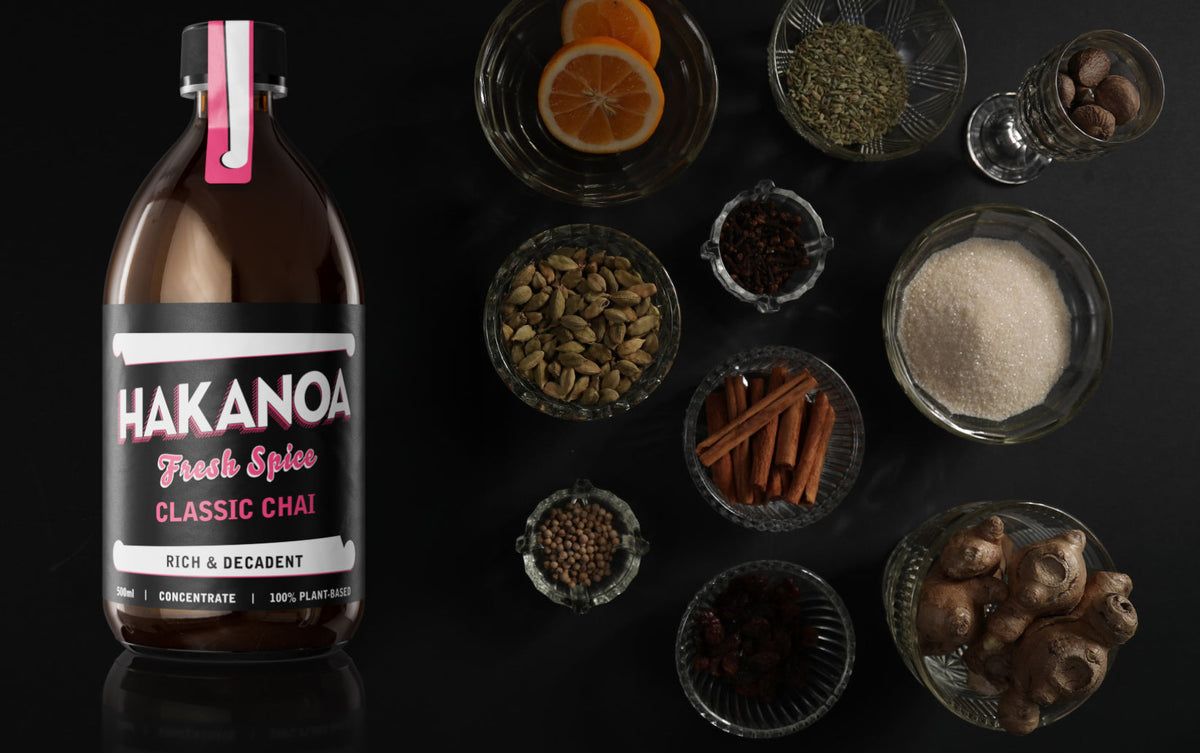
The secret to great chai is the balance of its spices. Different countries, regions and households have thier favourite blend. Hakanoa's recipe is based in a recipe from Rajasthan, the land of kings.
Ginger brings warmth, brightness and a lively heat that lingers pleasantly.
Cardamom provides the wonderfully fragrant, almost floral aroma that is so characteristic of good masala chai.
Cinnamon adds natural sweetness and a rounded, woody warmth.
Cloves contribute a deep, aromatic intensity. A little goes a long way.
Black pepper introduces a gentle, lingering heat that gives a spicier chai its distinctive bite.
Other ingredients, such as fennel, nutmeg or white pepper, can bring different layers of flavour.
And then there's the tea itself. Strong black tea provides structure, depth and a pleasant astringency that balances the richness of milk and the sweetness of sugar.
The important thing is that no single spice should overwhelm everything else — unless, of course, that's exactly how you like it.
3. Why fresh spices make a difference
Whole spices contain aromatic oils that give them their distinctive flavours and fragrances.
Crushing or grinding spices releases those oils, which is why freshly prepared spices generally have a livelier, more complex flavour than powders that have been sitting on a shelf for months.
Made from scratch at home, fresh spices are added to milk and gently warmed for at least 10 minutes. The fats from the milk take up the oils from the spices, helping to carry and blend the flavours. Tea and sugar are added much later, so the tea stays bright and doesn't develop bitter tannins.
Rebekah's mission was to make a Chai concentrate without milk, so that the customer can choose any form of milk they want when ordering from a barista. She worked out that slowly simmering and steeping fresh spices in water allows their different flavours to develop and mingle. Just like a curry, the spices taste so much better after a night of cooling and allowing the flavours to marry. Ginger contributes warmth, cardamom releases its fragrance, and the deeper notes of cinnamon and cloves gradually emerge. We sieve our steeped spice mixture, than blend in our organic black tea and organic raw sugar just before bottling.
At Hakanoa, we make our chai concentrates in small batches using real ginger, carefully selected spices and organic black tea.
It's a slower process, but one that produces the depth and character we love in a good cup of chai.
4. What's the difference between chai tea and a chai latte?
They're closely related, but the difference is mostly in how they're served.
Chai tea is generally a lighter drink, made by combining spiced tea with hot water, sometimes with a splash of milk.
A chai latte is a creamier version, made with a generous proportion of hot or steamed milk.
Traditional Indian masala chai is prepared by simmering spices with milk and sugar together, and adding tea later - rather than steaming the milk separately.
The café-style chai latte is a more modern interpretation, but when it's made with a good spiced tea base, it will be every bit as satisfying.
5. How to make a really good chai latte at home
You don't need an espresso machine or a cupboard full of spices to enjoy a lovely chai latte.
Using Hakanoa Chai Concentrate makes it beautifully simple.
For one generous cup:
-
30 ml Hakanoa Chai Concentrate
-
220 ml hot milk, dairy or plant-based
-
A little extra cinnamon, if you fancy
Heat your milk gently until steaming, then froth it if you like a velvety café-style texture.
Pour the chai concentrate into your favourite mug, add the hot milk, stir and enjoy.
For a stronger, spicier drink, add a little more concentrate. For something gentler, use slightly less.
The beauty of making chai at home is being able to adjust it exactly to your taste.
6. Which Hakanoa chai is right for you?
We make three different chai concentrates because we know that not everyone likes their chai the same way.
Spicy Chai — for those who love a bit of bite
Our Spicy Chai is bold, aromatic and full-bodied, with plenty of ginger warmth and a lingering peppery finish. Inspired by the Rajasthani masala chai tradition, it's for people who like their spices to make themselves known.
Classic Chai — for a gentler, comforting cup
Our Classic Chai has a softer spice profile, with fennel and white pepper adding to a rounded sweetness. Smooth, balanced and comforting, it's a lovely everyday chai.
Unsweetened Chai — for those who prefer to choose their own sweetness
Our Unsweetened Chai lets the tea and spices speak for themselves. Robust, aromatic and completely free from added sugar, it's ideal if you prefer an unsweetened drink or want to add your own sweetener. This has the warm finish of our Spicy Chai, and is our favourite blend for a Chai Tea without any milk.
Explore Hakanoa Unsweetened Chai
7. Can you make chai with plant-based milk?
Absolutely.
Oat milk makes a particularly creamy chai latte, while soy milk offers a rich texture and a relatively neutral flavour.
Almond milk brings a gentle nuttiness, and coconut drinking milk adds a delicious tropical note that works beautifully with ginger and cardamom.
Whichever milk you choose, warm it gently and avoid boiling it unnecessarily. Different plant milks behave differently when heated, so a barista-style version can be helpful if you enjoy frothy chai.
8. Is chai just for winter?
Not at all!
While a steaming mug of chai is hard to beat on a cold day, those same aromatic spices are wonderful served cold.
For an easy iced chai latte, combine 30 ml of Hakanoa Chai Concentrate with 220 ml of cold milk and pour over plenty of ice.
You can also experiment with chai in milkshakes, desserts, porridge and baking.
The combination of ginger, cinnamon, cardamom and black tea has far more possibilities than you might expect.
Common questions about chai
Does chai contain caffeine?
Traditional masala chai contains black tea, so yes, it generally contains caffeine. Hakanoa Chai concentrates are very low in caffiene, as we make a very strong but very fast brew of tea to avoid developing bitter tannins.
Is chai always sweet?
No. While many traditional recipes include sugar, sweetness is a matter of preference. In India, it is usually very sweet and rich and is served in tiny cups. The best way to replicate that style of sweetness at home is to add some Sweetened Condensed Milk to your cup. Our Unsweetened Chai is a good option for people who prefer to control how much, if any, sweetener they add.
Is chai the same as a dirty chai?
Not quite. A dirty chai is simply a chai latte with a shot of espresso added. It's a popular combination for people who enjoy both coffee and warming spices.
Can I drink chai without milk?
Certainly. Chai concentrate can be diluted with hot water for a lighter, more tea-forward drink. It's a lovely way to appreciate the individual spices. Any of our Chai's can be served this way, but we recommend the Unsweetened Chai for a milk-free drink in particular.
What's the difference between real chai and chai powder?
Chai can be prepared in many forms, including liquid concentrates made with bought-in flavours, spice & tea paste concentrates, loose-leaf 'sticky' chai that needs to be brewed, and instant powders.
Most instant powders rely heavily on sugar, milk powder and flavourings, the 'Sticky' style gives the spices and the tea the same amount of brewing time which doesn't give the spices a proper chance to deliver flavour, and the liquid concentrates that use 'natural flavours' instead of actual spices and tea are a poor imitation of true Chai.
It's worth checking the ingredients to understand what you're drinking.
A good cup of chai is worth taking time over
Whether you prefer yours strong and peppery, smooth and gently sweet, or completely unsweetened, good chai is about much more than a fashionable café drink.
It's about the wonderful flavours that develop when tea and spices are brought together with care.
At Hakanoa Handmade, that's what we love most about making chai: taking beautiful ingredients, treating them properly, and creating something genuinely delicious.
All you need to do is warm the milk, choose your favourite mug and enjoy.